Tuesday, September 8, 2009

Welcome to Nepal

Welcome to Inside-Nepal Travel and Volunteer program!

Are you looking for a volunteer work experience, career break, or just a meaningful travel experience, Inside-Nepal offers a variety of volunteering programs in Nepal. When you volunteer in Nepal with us you receive a great volunteering experience and are guaranteed a professional support network to guide you throughout your stay in Nepal. Socially acceptable and financially independent volunteering program are located in multicultural environment where people are helping and hospitable.Our Volunteer programs are the perfect way to help others, make a difference, find purpose, enjoy a meaningful conversation, feel involved, use your skills in a productive way, develop new skills, meet new people,explore new areas of interest, impress yourself, expand your horizons, make new friends and Strengthen your resume.

Our Volunteer opportunities:
Teaching English
Homestay and Cultural Exchange
Health and Sanitation Awareness Program
Environmental Awareness
Women Empowerment Program
Income Generating Training
Teach and Learn at Monastary
Orphanage Volunteer Program
Organic Farming and Permaculture

For More: http://www.inside-nepal.blogspot.com
Email: inside.nepal1@gmail.com

Saturday, September 29, 2007

Volunteer Programs

Teaching English:
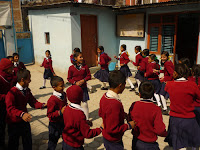
Teaching English to the children in Nepal is at times challenging, but seeing their progression and enthusiasm make the overall experience extremely satisfying. The volunteers will get the opportunity to teach students who are eager to improve their conversational English skills. Volunteers in this program will teach English to children in government schools; you can also teach in other disciplines such as math, science, music, geography, art, dance, etc. Depending on your specific area of expertise.

The students that you will be teaching range from 5-16 years old, and are typical in groups of around 30-50 students per class. The subject material that you will be teaching i.e. the curriculum for the key subjects will be taken from the Nepali students' standard book. However volunteers are also encouraged to create their own lesson plans; lots of inspiration for classes can be found online as well.

Each institution has its own permanent staff member who assists volunteers with their teaching and in communicating with the children and colleagues. Classes generally run six days a week, with four to six class periods each day and a break for lunch.

Teaching English includes: Teaching English at the school, Orphanage, women's group and village community library.


Home Stays and Cultural Exchange
Home stays and cultural exchange programs is a fantastic way to get more out of a trip to Nepal and can be arranged in most areas of Nepal with our 30 Host families. Participants will be placed with a Nepali family in a small rural village for the duration of their stay. This provides the volunteers with an excellent opportunity to immerse yourself in the depth of all aspects of Nepali culture, lifestyle, language, food and people. Volunteers should remember that this is a cultural exchange and that an effort to offer some knowledge of their own home culture and customs to the family with whom they stay is appreciated. The best time to come is between August and December, the time when most large local festivals take place resulting in an overall more exciting experience.

During their stay, volunteers will attend 2 hours of language lessons in the morning and in the afternoon. They will also have the opportunity to visit and help out at the local school. Home stay programs are best organized from August to December which is the time when most large local festivals take place. This makes for an overall more exciting experience for the volunteer. Nepali culture is distinctively friendly and open and participants are made to feel as though they are part of the family. Inside-Nepal local co-coordinator will be on hand to help volunteers.

Environment Awareness:
Volunteers will teach environmental awareness at the local school and/or Environmental Post for 2 to 4 hours each day, Sunday to Friday. Environmental awareness projects will be defined by the individual volunteers based-upon their areas of expertise and the needs of the village community. Example projects include: creating "green" clubs, planting a flower garden, planting trees, garbage management, recycling programs, making a smokeless stove, building a toilet pit, etc. Volunteers may also provide assistance to youth clubs or women's groups in the community sharing their ideas, skills and knowledge about environmental issues. After completing the Nepali language and cultural training, volunteers will be placed with a Nepali family in one of the program villages. The host family will live no more than a half hour from the school/Environmental Post Inside-Nepal local co-ordinator will be helping to volunteers.


Women Empowerment:


Working toward women's empowerment enables you to support women in their pursuit for healthy and sustainable livelihoods. Women's groups provide a forum for issues such as family health, women's rights, and access to resources, income generation, and other challenges women face in their daily lives. Volunteers have the opportunity to exchange ideas, collaborate in ongoing projects, teach basic English skills, help with small businesses, and be a positive role model. You can also provide support in many other ways, depending on your skills and interests and the needs of the local community.So, Inside-Nepal invites all interested national and international volunteers to be a part of our women development programmes. Your small effort can make a big difference to the women in the most marginalized communities.

Teaching at monastery:


In this project you will be educating Buddhist monks in the age range of approximately 5-16 years old. In The monastery at any given time there around 30 to 40 monks, of which there will be 2 classes, one for seniors and one for junior students.

Inside-Nepal will provide you with a guide to planning lessons for the students but it encouraged that you compose your own lessons and games for the students to keep them stimulated.


Health and Sanitation:


This program is especially for Doctors, nurses, nursing students and medical students. Volunteers will work at hospitals and community health clinics in Kathmandu, Chitwan or Pokhara. Volunteer will be helping doctor or health assistance at the clinic performing tasks like dressing wounds, administering shots, drawing blood, holding babies while they are being treated, helping to screen and organize patients. They can also assist local staff with getting medicines/supplies, and generally helping out in whatever capacity you might be needed.

This program offers you a wonderful chance to support the work of local doctors and nurses in a country where health care is a major issue, and the number of trained staff in rural areas is low. As such your presence could make a huge difference to a community.


Work with Orphans:


For orphaned children one of the most beneficial things for them is to be able to have access to Education. As it will provide more opportunities for them in the future once they have to make their own way in the world. Resources are often scarce so if they have access to a teacher it will be a great advantage to them.

Depending on your own expertise and interests, though, you can also teach drawing, songs, music, dance, cooking, or any number of activities, and generally just spend quality time with the children.

Some orphanages can provide accommodation for volunteers; alternatively you can stay with a local host family and work at the orphanage during the day/evening. Your duties will include many things, basically taking care of the needs of the children, teaching them, helping with cooking, getting them ready for school. Consequently it is can be challenging but also one of the most rewarding experiences you can have, as you are improving the lives of the children.

Your day will consist of teaching for a few hours in the morning and in the evening, and in the afternoon looking after the general wellbeing of the children. Alternatively in the afternoon you can go to the local school and teach there instead of staying at the orphanage.
Most orphanages also welcome assistance from Volunteers for the organizations themselves. This involves working with staff to develop marketing, fundraising, and program strategies for the orphanage.

Working at the orphanage home includes: Helping children for their school work, encouraging the children, teaching them English language and other discipline.


Organic Farming and Permaculture:


As a volunteer with Organic Farming and Permaculture Program, you will gain hands-on experience helping the farmers, students and local communities to cultivate and harvest organic crops, vegetables, fruits, herbs through sustainable farming methods. If you are new to organic farming and permaculture, then you can learn from the host and local farmers. We have several vibrant farms where a variety of vegetables, crops, fruits and herbs now thrive within the Kathmandu Valley, Chitwan and Pokhara.


Training


Upon your arrival to Kathmandu you will be staying at hotel near about 3-4 days for training. In your tranning period you will be provided with basic Nepali language class, cultural information, family information, personal safety information (how to adjust into Nepali people) 2 hour every day. During your tranning period you will be visited Kathmandu Valley (some sightseeing) 2 hours every day.


Placements:
So far as placement is concerned stay in a family where they are offered Nepali food twice a day (around 9 o'clock in the morning and 7o'clock in the evening). Tea is served in the morning and afternoon. Usually school, local organization/club/women groups and Health post at easy distance away and the volunteers will have to teach 3-4 classes everyday. Generally school/organization starts at 10 a.m. and is over at 4 p.m. More often than not, school runs 6 days a week and Saturday is a holiday. On that day the volunteers can get together and share their experiences. They can travel to nearby towns to purchase things for daily use and other areas in case of longer vacation. Besides their teaching time, volunteers can utilize their spare time in organizing the youth and women's groups of the community to do some worthwhile activities regarding avoidance of plastic materials and raise awareness about income generating programs.

Program Fees and Expenses

Inside-Nepal is a non-profitable organization and is run by volunteers and culture tour. Our revenue directly used in project which runs by organization. Inside-Nepal program fees .
The volunteer program fees:
Registration Fees $50

2 weeks $250

3 weeks $ 300

1 month $ 350

2 months $550

3 months $750

4 months $950

5 months $1150
Please contact at inside.nepal1@gmail.com for information fees for placements longer than 5 months.


Program fees can be paid at the office in Kathmandu. If you would like to pay the fee beforehand, we will email you bank details.


The above costs include the following:-

Airport pickup and drop off

Language and cultural orientation training
Sightseeing in Kathmandu

Specialised training for your chosen program

Land Transportation to and from village placement

Accommodation and meals during training period in Kathmandu

Acommodation and meals with your host family during the placement

24 hours Volunteer supervision and office administration Legal Service

Program fees don't include:Visa/Visa extension fee

Traveling and other expenses out of the placement during weekends

Air Tickets (Domestic/International)

Laundry service Bar Bills Telephone Calls

The other costs you will need to meet are:Your flights, Visa, Shots, travel insurance, police check, and corresponding airport departure taxes. Also you will need a weekly budget from US$30 to cater for all your other expenses like bottled water, personal items, beverages and entertainment. Living in a village is relatively inexpensive in comparison to most western countries and usually it is difficult to spend more than US$ 10 per week during your placement.For the final confirmation we need to receive your flight arrival information. The program fee can be paid on your arrival at the Inside-Nepal office.

Friday, September 28, 2007

Travel and Volunteering Package

Welcome to visit the beautiful landscape of Nepal and experience the magic of the Himalayas. It is a country of depth and diversity in culture, spirit, and geographical from the wildlife of Chitwan National Park to Mt. Everest, the highest mountain on the planet. The culture and religious diversity gives you the unique feel of Nepal, where the people of many regions are mixed with Indian and Tibetan influences. To visit the sheer grandness of a country that lies within the jungle of the Terai and the highest of the Himalayas is indeed one of the natural wonders of the world.
Inside-Nepal Travel & Volunteer program is a wonderful experience for volunteers who wish to explore the beauty of Nepal. By choosing this option volunteers can enjoy both ways. We have developed some very interesting travel and volunteer package within Nepal.


Arrival in Kathmandu volunteers will take part in a rigorous training schedule designed to help you settle into your placement successfully. The aim of the training is to teach you enough Nepali language to communicate with people that speak limited English and learn about cultural differences that determine how you conduct yourself within the host family and within traditional Nepali villages. If the placement with Inside-Nepal involves teaching English, additional classes on teaching English as a foreign language will also be included. The length of the training program is determined by how long you will be in a placement with Inside-Nepal, for volunteers on the short 2 week placements the training period will last for 3 days, for those on longer placements training will last for up to 10 days.


Training
· 2 to 3 hours of basic Nepali language a day.
· Classroom survival tips
· Cultural information / gender issues
· Environmental / societal issues
· Sightseeing in Kathmandu


Attention : If you want to extent your  trekking day or want to do any special activities then you have to pay additional.

How does the program go?

2 Weeks Travel and Volunteer Program Cost: $500

Program run by: (3 days sight seen and language class + 5 days vol.+ 2days Jungle safari + 2days on the road + 1 day RW + last day goodbye dinner)
One office staff with volunteer (placement, sight seen and Travel Package)

The cost covers following Program
- 1st day Transportation (Airport to Office) + Welcome Dinner
- 2nd days Morning Class(How to adjust Nepali people + Project information)
- 2nd days Afternoon, sight seen Kathmandu,(Durbar square, Sayambhunath (World Heritage Places)
- 3rd days Morning class( Nepali Language + Project Information)
- 3rd day Afternoon sight seen Kathmandu (Pashupatinath, Buddhanath,)(WHP)
- 4th Day One the road - 5th – 9th day Volunteering (Volunteer Project)
- 10th -11th day at Chitwan National Park for Jungle Safari
Program :- Elephant ride to see wildlife animal, Elephants baby center or Crocodile project, Local Cultural Dance, Village tour, Jungle walk etc. ) (Food and drink does not include)
- 12th day (on the road) return to Kathmandu
- 13th day Report writing
- 14th is a goodbye party (Good bye dinner + last day accommodation)

Note:- If you want to extra package(rafting, trekking) after 2 weeks volunteer program, we can manage but charge will be extra. Rafting: (1-10)days Cost: ($50-$400) Trekking: (5-30)days Cost : per-day $30 (tea house). Per-day $45 (camping), and (Govt. tax + if Airfare) is extra


4 weeks Travel and Volunteer program Cost: $700

Program run by: (3 days sight seen and language class + 10 days vol.+3 days Jungle safari + 1day rafting + 6 days trekking + 3days on the road + 1day report writing + last day goodbye dinner)
One office staff with volunteer (placement, sight seen and Travel Package)

The cost covers followaing program
- 1st day Transportation (Airport to Office) + Welcome Dinner
- 2nd days Morning Class(How to adjust Nepali people + Project information)
- 2nd days Afternoon, sight seen Kathmandu,(Durbar square, Sayambhunath (WHP)
- 3rd days Morning class( Nepali Language + Project Information)
- 3rd day Afternoon sight seen Kathmandu (Pashupatinath, Buddhanath,)(WHP)
- 4th Day One the road
- 5th – 15th day Volunteering (Volunteer Project)
- 16th -18th day at Chitwan National Park for Jungle Safari
Program :- Elephant ride to see wildlife animal, Elephants baby center or Crocodile project, Local Cultural Dance, Village tour, Jungle walk etc.) (Food and drink does not include)
- 19th day (on the road) return to Kathmandu or Pokhara
- 20th-24th Short trekking (staying at Tea house) (Food drink + Govt. tax does not include)
- 25th day on the road - 26th day Rafting program (Trishuli river)
- 27th day report writing and marketing at local market.
- 28th last day volunteer goodbye party

6 weeks Travel and Volunteer program Cost: $900

Program run by: ( 3 days sight seen and language class + 18 days Vol.+3 days Jungle safari + 2 days Rafting + 10 days Trekking + 4 days on the road + 1day report writing + last day goodbye dinner)One office staff with volunteer (placement, sight seen and Travel Package)

The cost covers following program
- 1st day Transportation (Airport to Office) + Welcome Dinner
- 2nd days Morning Class(How to adjust Nepali people + Project information)
- 2nd days Afternoon, sight seen Kathmandu,(Durbar square, Sayambhunath (WHP)
- 3rd days Morning class( Nepali Language + Project Information)
- 3rd day Afternoon sight seen Kathmandu (Pashupatinath, Buddhanath,)(WHP)
- 4th Day One the road
- 5th –23th day Volunteering (Volunteer Project)
- 24th - 26th day at Chitwan National Park for Jungle Safari
Program :- Elephant ride to see wildlife animal, Elephants baby center or Crocodile project, Local Cultural Dance, Village tour, Jungle walk etc. ) (Food and drink does not include)
- 27th day on the road to Pokhara
- 28th - 37th day to Pokhara and its surrounding
Annapurna trekking – (Food drink + Govt. tax does not include)
- 38th return to Kathmandu
- 39th - 40th day Rafting program (Trishuli river)
- 41th day report writing and marketing at local market.
- 42th volunteer goodbye party

8 weeks Travel and Volunteer program Cost: $1100

Program run by: ( 3 days sight seen and language class + 25 days Vol.+3 days Jungle safari +2days camping (river& jungle) + 2 days Rafting + 15 days Trekking + 4 days on the road + 1day report writing + last day goodbye dinner)
One office staff with volunteer (placement, sight seen and Travel Package)

The cost covers following Program
- 1st day Transportation (Airport to Office) + Welcome Dinner
- 2nd days Morning Class(How to adjust Nepali people + Project information)
- 2nd days Afternoon, sight seen Kathmandu,(Durbar square, Sayambhunath (WHP)
- 3rd days Morning class( Nepali Language + Project Information)
- 3rd day Afternoon sight seen Kathmandu (Pashupatinath, Buddhanath,)(WHP)
- 4th Day One the road
- 5th –30th day Volunteering (Volunteer project)
- 31th -35th day at Chitwan National Park for Jungle Safari
Program :- Elephant ride to see wildlife animal, Camping, Elephants baby center or Crocodile project, Local Cultural Dance, Village tour, Jungle walk etc. ) (Food and drink does not include)
- 36th day to Pokhara (on the road)
- 37th - 50th day to Pokhara and its surrounding Pokhara & Annapurna trekking – (Food drink + Govt. tax does not include)
- 51th return to kathmandu (on the road)
- 52th - 53th day rafting program (Trishuli river)
- 54th Nagarkot or Kakani Tour
- 55th day report writing and marketing at local market.
- 56th volunteer goodbye dinner


Volunteer have the unique opportunity to design their own travel and volunteering package on their interests. We will happy to provide you necessary information and organize you travel and volunteering package memorable and unforgettable.


Program Location

Volunteering : Kathmandu Valley, Pokhara, Chitwan.
Jungle Safari : Chitwan National Park
Rafting : Trisuli, Bhotekosi
Trekking -
- Annapurna
- Mount Everest
- Pumori
- Kanchenjunga

General Information and FAQs

General Information

Tourist Visa Information: A tourist visa is valid for up to 150 days of a year from the date of issue. For more information about visas, please contact the Nepali embassy in your country.

  • 15 days Multiple entry - US$25
  • 30 days visa fees Multiple entry - US$40
  • 100 days Muntiple entry - US$100

Likewise, the government has also revised fee required to extend days of stay and visa renewal. As per the revise fee structure, Tourist Visa can be extended by paying US$ 2 or equivalent Nepalese currency per day. Likewise, Multiple Entry facility can be obtained only for the extension period by additional US$ 20 and visa fee for the extended period.Similarly, tourists can renew their visa by paying Nepalese currency equivalent to US$ 3 on the regular visa extension fee.Please use this link for more information about visas to Nepal http://www.immi.gov.np/

Embassies: You might want to register with your embassy whilst in Nepal - give them Inside-Nepal's details as your contact address in Nepal so that they will always be able to contact you through us. For more details please use this link:
http://www.tourism.gov.np/neplese_mission.php
Length of stay: We require you to work with us for a minimum of one week. The amount of time you are able to give has a direct impact on what you will be able to achieve and the amount you will get out of the placement. If you are here for longer, there will be more opportunities to explore the country by going trekking, rafting, or on a jungle safari.

Health: Several vaccinations are required prior to coming to Nepal, some need a course of treatment before you leave. Visit your nearest traveler's medical centre to discuss your needs. Ensure you have adequate travel insurance. The vaccinations you may need include:
a. Tetanus
b. Diphtheria
c. Polio
d. Hepatitis A & B
e. Typhoid
f. Yellow fever
g. Rabies
h. Tuberculosis
i. Malaria
Please consult your doctor before traveling. More information is available from the WHO's (World Health Organization) Travelers health information.


Money: Nepali rupees are the local currency. There are about 70 rupees to US$1, approximately 97 rupees to 1 Euro and 125 rupees to a Pound Sterling. There are bank ATM facilities in Kathmandu and Pokhara; US traveler's cheques can be easily changed. Credit cards, though accepted at most places, usually incur 3-4% additional tax. Generally, US$12-18 per day is sufficient for food and accommodation in a budget hotel/lodge. Nepali rupees can be obtained on arrival at Kathmandu airport.
Food and Drink: The local staple meal is dal bhat (rice with lentil soup, vegetables, and pickle). On trekking routes and in tourist areas, a variety of western dishes are also served. Drinking tap water is not recommended unless it has been treated with chlorine or iodine tablets which are readily available. Otherwise you can get the water boiled or buy bottled mineral water.

Weather: The width of Nepal is only about 200 km on average, but within this short distance the altitude of the land rises from a lowly 60 meters to all the way up to above 8,848meter high. Hence the weather depends upon the altitude of the place in Nepal. However, in general Nepal has four climatic seasons: Spring, Summer, Autumn and Winter.
Spring starts from March to May. The temperature of this season fluctuates between 20 °C to 30 °C (68 °F to 86°F).
Summer starts from June to August. These are also the pre-monsoon months with occasional evening-thunderstorms and hot temperature.
Autumn starts from September and ends by November. During this period, the climate is dry and mild with temperature fluctuating between 20 °C to 30 °C (68 °F to 86 °F).
Winter starts from December to February. The morning and evening are very cold while the afternoon is pretty sunny. The temperature during these months rises from 15 °C to 20 °C (59 °F to 68 °F).
Peoples and Cultural Attitudes: Staring at things and people in Nepal is a national pastime, and is something you will have to adjust to. One of most problematic things that you will encounter is the fact that the concept of personal privacy does not exist in Nepal. Also that all your property will be treated as public property by your Nepali friends.

Activities: Many volunteers like to try something in addition to volunteering during their time in Nepal. Previous activities have included trekking, rafting, visiting the jungle, bungee jumping, visiting Lumbini and much more. Most activities can be arranged by yourself or you may want to team up with other volunteers. However, if you do want to do an arranged activity, such as Trekking, Jungle Safari, bungee jumping or rafting, there are a couple of companies we would recommend. Organizations will usually offer discounts to volunteers, so make sure you take your volunteering card along to see them.

Getting to Kathmandu
By Air: Nepal has only one international airport which is in kathmandu. So all international flights and the majority of domestic flight start or terminate here. Although a number of major airlines sell flights to Nepal, most of these do not operate direct flight themselves so most people will arrive via flight from Dubai, Baharain, Bangkok, Hong Kong, Qatar or the India. Among the airlines that fly direct to Nepal are Thai Airways, Qatar Airways, Gulf Air, Austrian Airways, Korean airlines, Korean airlines and Indian Airlines as well as a number of smaller Indian airways. Nepal Airways operate flights to a number or locations although they do not have the best reputation for reliability. Tribhuvan airport is located about 20 minutes from the center of Kathmandu and all volunteers will be met by a Inside-Nepal representative at the airport. NOTE: Most international flights require confirmation 72 hours before departure. Try and obtain the confirmation telephone number before you go to your placement, so that wherever you are 3 days before you are due to leave you can easily confirm that you still have a seat.

Overland: Volunteers occasionally arrive in Nepal overland after traveling in either India or Tibet. It's possible to arrive in Kathmandu by bus, or sometimes a combination of bus and train from Delhi, Varanasi, Kolkata and Darjeeling among other places in India and also from Tibet. The majority of buses arrive at the city bus station in Kathmandu although arrival times can obviously vary dramatically so we will arrange arrival information with you once you have booked.

Meeting Volunteers: You will be met outside the airport terminal by a Inside-Nepal representative holding a placard with your name on it who will then take you to your guest house. Please provide us your flight information as soon as possible so that a punctual pick-up can be arranged. If you are planning to arrive by bus let us know when and what time you are arriving in Kathmandu. Just incase give us a call.
Volunteer's Work: The number of hours worked by volunteers will depend upon the area of volunteer work. The Nepali work week falls from Sunday - Friday with Saturday being the only day off. Volunteers work from 3-5 hours per day with the opportunity to work more if you choose. Times for each placement vary, when working in children's homes or at the monastery you will teach and help them in the morning before school and for a few hours after school. Hours are approximately 6:30-9am and 5:30-7:30pm. However these are just approximations, as we try and tailor your hours to the needs of the children.

Accommodation: Volunteers either stay at a home with local families or if working in an orphanage they often stay in the orphanage and volunteers working at monastery stay at the monastery. Nepali people are extremely hospitable and volunteers will be well looked after however the accommodation will be typically Nepali and therefore basic by Western standards. Toilets and showers are usually Nepali style and the electricity supply in many places can be unreliable. Most of our home stay families have lots of previous experience in looking after volunteers. Volunteers staying in orphanages or at the monastery are given their own room within the orphanage.
Program Fee: The program fee should be paid to us upon your arrival in Kathmandu. If you would like to transfer money in to our bank account we will email you bank details.

Application Process: Our application process typically takes two or three days, but can be speeded up if there is a need for that. When we get the "application" from you, we will send confirmation email to you.
Letter of appreciation: Once you finish your placement, you will get a Inside-Nepal's letter of appreciation stating the time and place you have worked.
Internet: Kathmandu has plenty of internet cafes, all of which charge the same kinds of rates. When you first arrive in Kathmandu, you'll probably be shocked at the slowness of the internet here. Get used to it. Once you leave Kathmandu things get slower and slower and taking an hour to open your inbox will become a regular occurrence. That's before you think about things such as electricity cuts and telephone line failures. By the time you return to Kathmandu, you'll be amazed at the speed of the internet there and when you return home you won't quite believe how fast you can send emails! Whilst in Kathmandu take advantage of the better internet to tell people that you may not be able to read emails or reply to emails for weeks at a time and that they shouldn't worry. Maybe also threaten them with dire consequences should they decide to send you attachments - attachments make it almost impossible to do anything with your email.

Haggling: Everywhere you go in Nepal you will find yourself haggling, especially once you speak a little Nepali. Practice haggling from day one and always offer less than what the shopkeeper asks.
Sightseeing: You'll usually get to see some of the sights in Kathmandu with Inside-Nepal, but you may want to see some places yourself as well. Try to get your Inside-Nepal identity card first, as it will help to get you into places such as Swayambu, Durbar Square etc for free when foreigners usually have to pay.
Some temples may insist that you remove all leather before entering, so if you have a non leather belt and bag that may be useful. Many places in Kathmandu are so used to tourists that they may not say anything, but out in the regions this may happen more often.

Clothes: When you first get here it's tempting to go out and buy yourself a whole new wardrobe simply because it's so cheap. DON'T. It's amazing how many volunteers lose or gain weight during their stay, so wait until you're ready to leave before buying clothes.

Shopping: As per clothes, when you first get here it's tempting to buy lots of things due to their low prices. Again, DONT. Once you've spent some time in Nepal and seen the prices outside of Kathmandu, you have a better idea of the kind of prices that you should be paying for thing. In addition, once you speak Nepali it's amazing how much easier it is to get a discount. Wait until the end of your trip when you have a clear idea of what money you have left, and you know what kinds of things you really want to buy. Try and take someone from the office if you want to buy things such as Pashminas or Thangkas as they can help you find better quality items. yak wool scarves/shawls, incense, jewellery and material. Pashmina, cashmere and Thangkas are more expensive but are still far cheaper than at home. And tailor made clothes are a fantastic bargain in Nepal - perfectly fitting trousers in your favourite material for a few dollars.

Books: If you want to read anything whilst in Nepal, you can buy books from several second hand stores in the Thamel area. All of these stores will then buy the book back at 50% of what you paid, and they will also buy books that you brought with you and no longer need.

Laundry: There are plenty of places to get your clothes washed in Kathmandu. Most places charge by the piece.

Frequently Question

Why do I have to pay a registration fee?

The registration fees goes towards the running of the organization (office space, staff, computers, email/internet and stationery). Inside-Nepal has a central office in Kathmandu and a branch office in Chitwan. We are currently sponsoring some orphanage and deprived children; part of the fee goes towards costs for these children's education and clothes.

What kind of volunteers is Inside-Nepal looking for?

InsideNepal has worked with universities and colleges, organizations, clubs, church groups, youth groups and individuals. You do not need any specialized training to work with us. We will provide you with appropriate training for your program, although experience in teaching, health work or environmental project can be advantage.

When should I arrive in Nepal?

We are very flexible and as such you can arrive at a date which is best suited to your needs. You are welcome to arrive a few days earlier than the start of your program. Our representative will meet you at the airport holding a sign with your name. He will take you to the hotel. We can arrange your accommodation if you arrive a couple of days earlier, but you will need to pay the costs for the extra time yourself, and for any non-Inside Nepal activities. In some cases, the dates of your program can be adapted if you contact us.

I meet any Inside-Nepal staff at the airport?

Yes, one of our representatives will meet you at the airport to pick you up holding a sign with your name.

Where will I be staying during my training period?

During your training period, you will be in Guest House in Thamel, Kathmandu.

How much money do I need?

Upon your arrival in Kathmandu you can get a room for $5- $8 a night, regular food for about $4 to $8 a day, internet access for about 40 cents per hour, laundry for about $3 for a medium-sized of load (they charge by the item). Transportation is relatively inexpensive too. We recommend that you purchase the Lonely Planet guide to Nepal. The travel guide for Nepal will help you estimate how much money you may need.(Remember that you need money for your visa and your flight tickets as well.)

Where will I be placed?

After we receive your flight confirmation we will find suitable placement for you.

What kinds of thing do I need to bring with me?

Sleeping bag

Hiking boots

Flip-flops

Fleece jacket (during winter months)

Sun cream

Mosquito net/repellent

Water purification tablets and water filter

Photos of your family/ friends

A few examples of your local currency

Music

National flag

Colored pencils, pens, drawing books, grammar books, charity donation t-shirts

Flashlight

Penknife

First aid kit

Is there age limit in program?

No.

What types of immunization/ vaccines do I need before coming to Nepal?

Tetanus

Diphtheria

Polio

Hepatitis A & B

Typhoid

Rabies

Tuberculosis

Malaria

(But first consult with doctor)

Do I need any travel medical insurance?

Yes, we highly recommend that you have travel and medical insurance.

Does Inside-Nepal pay for my trekking and other activities?

No, these are non-Inside-Nepal activities so you need to pay for them yourself. However, we can organize and recommend some trekking, rafting, travel agencies who will help you to arrange these activities.

Is Nepal safe?

Nepal is the land of Buddha. A couple of years ago it was one of the most peaceful places on the earth but these days because of political unbalance crime is increasing and there is some violence but, unlike many developing countries, Nepal is quite safe. Every year thousands of tourist visit Nepal. These days the situation is getting better.

What's the weather like in the placement areas?

Nepal's climate is seasonally changeable and different in different regions. Geographically Nepal is divided into three parts. The mountain region of Nepal is very cold in winter while the mid-hill region (Kathmandu and Pokhara) and mid-terai region (Chitwan) have different climate in different seasons. The weather is cold from December to March, humid and quite hot in the summer. The spring and fall are cool and pleasant. Please bring your winter clothes if you are coming in November, December, January, February and summer clothes for the rest of the months. We advise female volunteers not to wear short skirts in villages, and male volunteers not to wear shorts. It is traditional for Nepali people dress modestly and for girls to cover most of their body.

Emergency contact:

In case you miss our representative at the airport or if your flight schedule changes suddenly, please give us a call on 977- 9849056230 0r 977-9851088020

How to Apply

Volunteer Application You must be at least 18 years old to apply.
Note all fields are required. Please Copy it and sends through your E-Mail


First Name:

Middle Name:

Last Name:

Date of Birth : (mm/dd/yy)

Sex : (M) ( ) (F) ( )

Nationality :

Country :

Full Address :

Occupation:

Education Level:
High School Certificate Associates Bachelors Masters Degree

Telephone No:

Fax :

E-mail :

Program Information :

Why do you want to Join with Inside-Nepal ?

When do you want to start?

How long would you like to serve?

2 weeks

1 Month

2 Months

3 Months

4 Months

5 Months


What type of service do you wish to do?

Teach English (School and Library)

Environmental Awareness

Community Health Post

Home Stay and cultural Exchange

Women Empowerment Program

Tourism Activity

International Volunteer Village

Income Generating Training

Sports Training, Orphanage Volunteer Program

Teach and Learn at Monastary

Please describe any relevant experience you may have regarding your selection above:

Any special conditions regarding your service that Inside-Nepal should be aware of?

How did you find out about us?

News from Aletheia Bligh-Flower(UK) (June 29th 2011)

News from Aletheia Bligh-Flower(UK) (June 29th 2011)
Food-growing and Goat-Rising with the women group:The women who are predominantly kisan(farmer) were each given half a dozen banana plants for them to plant as a small cash crop. The women were easily able to plant them and will eventually be able to sell the banana to grow.Goats are a potular animal in Nepal. They are used predominantly as meat and there is always a market for them. The women group has been given a goat whose offspring shall then be given to the next women and so on. This gives all the women an opportunity to hear goats on a small scale in order to earn added incomes all

News (Nov.10th 2010)

News (Nov.10th 2010)
Inside-Nepal have been providing free Beauty Parlor training in Meghauli village to women group and supporting to 'one stone project' which is organize by Future Nepal. Two volunteers are working there in this moment. Both are from USA. Cristima is taking the classes about income generating to women and girls group and inspiring for small business. She is supporting to the beauty parlor. Peter is working under the stone project. He is a engineer. He is designing the park where the 'stone festival' going held on this Feb. 4th, 5th , 6th for 3 day. Both volunteer have enjoyed on our second biggest 'brother-sister' festival and taken part on Vaily Program (Singing and Dancing ) to collect the stone and fund for construction in the park.

School Painting program

School Painting program
Inside-Nepal has been assisting community schools in many ways since its inception. It aims to provide the volunteers immense opportunities to get involved in several activities at community schools and get first-hand experiences of working with the students and teachers. On Friday and Saturday (August 28th and 29th ), there was School Painting Program under Construction Project. Our volunteers Ann Wong (U.K), John Finefrock and Ian from Prescott College, Arizona, USA, accompanied by school teachers and some students, actively participated and painted three rooms of Nilganga School, located nearby Thamel. It was indeed a great fun to work collectively while exchanging skills and innovative ideas. The volunteers also distributed stationery items to the students.

Poem of Volunteer Mr. Cameron ( Cambridge Colledge)

Women of Nepal


From level palm of foot to her straight eyes
as if to walk were the heart of keeping still
straightness is where the woman’s beauty lies.

As she who under Himalayan skies
daily bends the mountain of her will
from level palm of foot to her straight eyes

to bear her bodyweight of home supplies,
gas, water, petrol, or a pothole’s fill,
straightness is where the woman’s beauty lies;

or she who ladles out the bowls of rice,
like a squatting buddha rocking on a heel
from level palm of foot to her straight eyes;

or dazzling teacher whose fingers flick and rise
to the dance of the words of a nursery drill,
straightness is where the woman’s beauty lies.

Like trees seeking the light of paradise,
their grain hardened, and made unbendable,
from level palm of foot to her straight eyes
straightness is where the woman’s beauty lies.

Cameron Hawke Smith
May 2010
Google